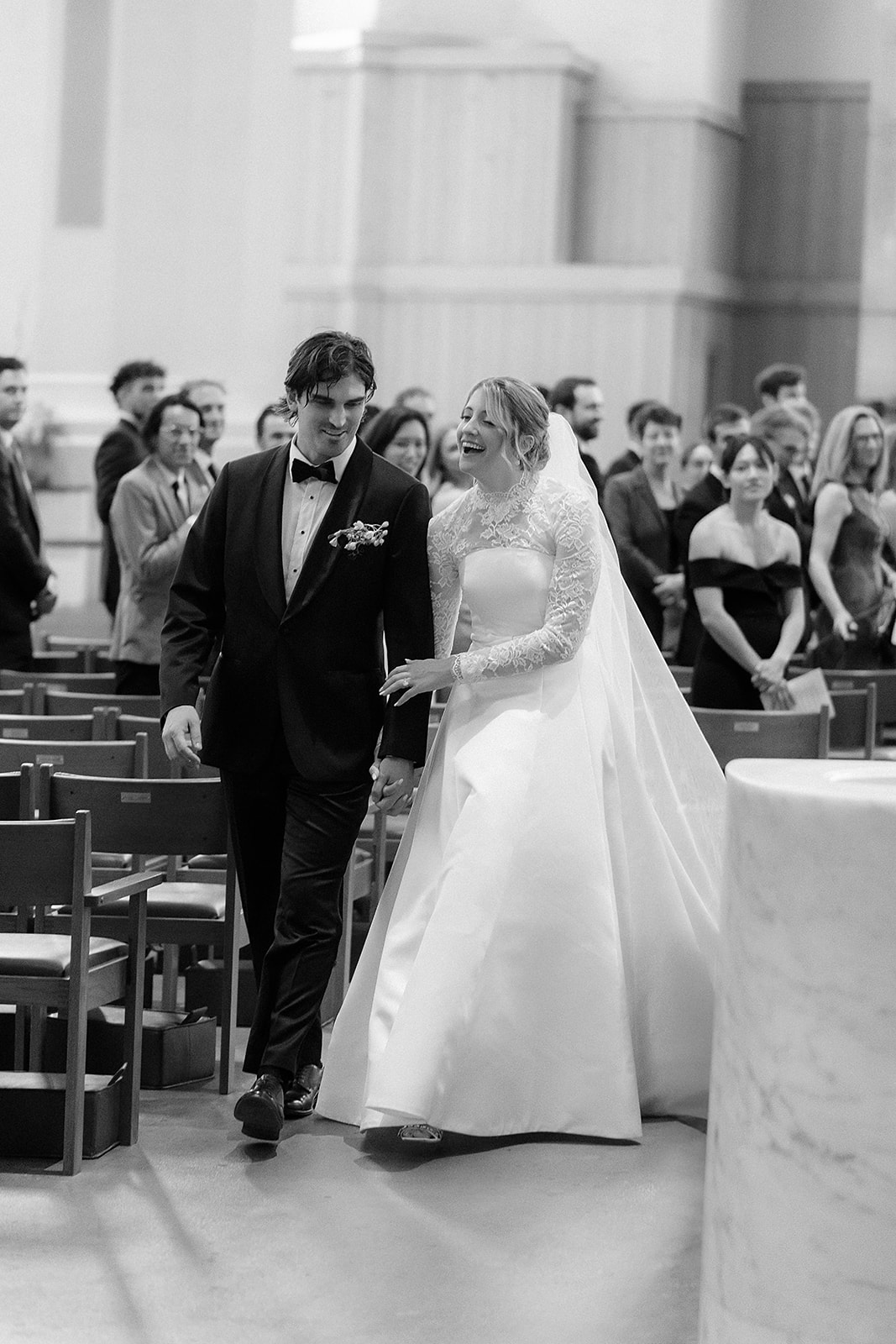
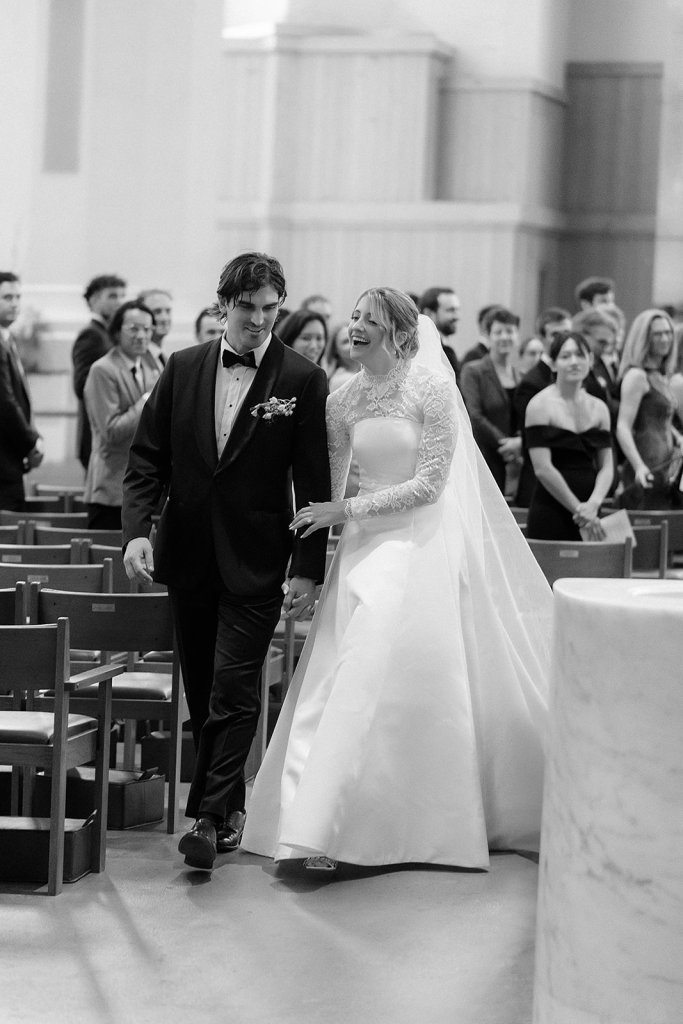
Photography Credit: Logan Weston
The Beatitudes of Jesus and Paul’s beautiful words on love from Corinthians were not composed with marriage in mind. They were meant as reminders to the communities that heard them of the values of God’s kingdom, which were counter to just about every value of the society around them, centered then—as ours is today—on power, wealth, and success at all costs.
And maybe that’s why they actually make great readings for weddings, because the love that makes a marriage endure is also often counter to the things we value as we pursue our careers, our financial security, our safe and comfortable lives.
Learning to love someone past the falling madly in love stage– important as that is–is a pretty good entryway into those upside-down values of God’s kingdom, where the meek inherit the earth and no personal gift or action is worth a penny without love. We won’t always love in the way Jesus and Paul want us to, but marriage is a good place to practice that kind of love, love that makes us better spouses, parents, friends, and members of our communities.
This is something those of us in long-term, committed relationships learn over the years. Whenever I read Paul’s words in Corinthians about how love is patient, kind, not envious or boastful or rude, not irritable or bossy or keeping records of the wrong things that others do, I’m mostly struck by how small, everyday, and ordinary his ways of quantifying love are.
Love, as Jesus and Paul explain it, is not expressed in bold, high-drama expressions of love or self-sacrifice that we see in movies. It’s more like a choice, made after a long, tiring day of work. Your spouse gathers just enough energy to give the house the quick vacuum that it really needs, and asks you if you can pick up your stuff off the floor so they can get it done. You might choose to immediately take ten minutes to do that for them, feeling grateful that they’re willing to take on a job you dislike. Or you comply with a sigh but pick up only your stuff because you didn’t make that mess, and it’s not like you didn’t already have your own long list of things to do!! I’ll let you guess which one of those choices is a Paul/Jesus move and which one is more like mine.
When we’re first in love, the Paul/Jesus choice tends to come easily because we’re besotted and idealizing the other—he’s so hot and always makes me laugh, and he vacuums! I should make him some double chocolate chip cookies! However, over time, we tend to revert to our usual patterns of prioritizing our own egos, our desire to win a point over our concern for the other person. I suspect this was as true in the communities to which Paul and Jesus spoke as it is for us today.
On that everyday level, Sam and McKinley have some differences that might cause this kind of friction in a relationship.
McKinley is extremely tidy; Sam is, well, not.
When Sam needs something, he buys it; McKinley’s first thought is, “Where is it going to fit? Do we really need another thing?”
Sam easily gets lost in thought and blocks out everything around him; McKinley is a great verbal communicator who often needs to speak her thoughts out loud to get them organized.
And yet, if you asked me to describe three things I love about Sam and McKinley’s relationship, I’d tell you about how consistently kind they are to one another, how carefully they listen to and attend to each other’s needs, and the low-key and calm way they resolve disagreements. From the very beginning of their relationship, I’ve seen all of that in their ordinary, day-to-day conversations with each other, and in the way they talk about each other to me. I notice it in the way McKinley pauses and takes time to gather her thoughts before offering her opinion on something they are discussing, or the way Sam can accurately tell me what McKinley will or won’t like about something, and how that alters his decision-making. Most of all, I appreciate the way they laugh together about their differences when they happen without holding grudges.
Those are small things, and yet, what Paul is getting at is the way the small things ARE the big things – how love is really just about choosing in the moments of our everyday lives to see and appreciate one another. I’m not saying “Argh, the vacuum again!” or “Is he even listening to me?!” doesn’t pass through McKinley and Sam’s brains — I suspect it does. But they just seem so quick to pivot toward gratitude toward the one who keeps their home decluttered, clean, and peaceful, or toward the one whose focused mind sees the way through complex problems. Their love is patient and kind, not arrogant or rude or irritable; it does not insist on its own way.
They are also, within their relationship, poor in spirit. Okay: Stay with me here. In the Beatitudes, to be poor in spirit isn’t about letting someone take advantage of you or have power over you or about suffering in silence; it’s about letting go of that ego-driven self who automatically thinks my ways are the best ways. Choosing to act in love is often simply choosing not to be irritated, not to immediately see someone’s behavior or words as an affront to myself. This is what Paul and Jesus are after when they encourage their followers to be meek and humble, not to be arrogant or insist on their way. They know that it’s when we let go of our egos that we can see the other person for who they are–fully human in their best and in their worst moments–in WH Auden’s words, seeing the beloved as “Mortal, guilty, but to me/The entirely beautiful.”
This kind of love gets us back to Jesus and Paul’s original message, because it moves us toward a more expansive love of our spouse and also our friends and neighbor, opening us to the very Heart of Love. From there, it teaches us how to help that spouse, neighbor, or friend bear and endure hard times when they eventually come—so inevitably that your marriage vows include ‘for better for worse, in sickness and in health.” The loving kindness that arises from those times is, to the poet Naomi Nye, the fullest expression of love.
“Before you know kindness as the deepest thing inside,” she says, “You must know sorrow as the other deepest thing…./ Then it is only kindness that makes sense anymore,/only kindness that ties your shoes….only kindness that raises its head from the crowd of the world to say/ It is I you have been looking for.”
The day we get married, we make a leap of faith into something that we know the tiniest part of. We take that leap of faith toward something different and bigger than our individual selves, something deeper and harder and more beautiful than anything we will ever experience alone. It’s big stuff, and Sam and McKinley, you’re going to need all the vows you are making today before the people you love to get through the times in your future when you’d rather not be kind, not be a peacemaker, when you’d rather just say, yeah no, I just can’t, one. more. minute.
Author David Brooks says it’s those times that call for a recommitment to each other, for what Abraham Joshua Heschel called “an ecstasy of deeds.” You do a mitzvah, a good deed, Rabbi Heschel says, and then you do another, and each one creates “luminous moments in which we are raised by overpowering deeds above our own will, moments filled with outgoing joy, with intense delight.” It is an “immemorial law of human nature,” Brooks continues, “that behavior change precedes and causes attitudinal change. If you behave kindly toward a person, you will become kind and you will cherish them.”
The many actions, small and large, that make up a wedding—the gathering of friends and family, the spaces filled with flowers, the readings you chose for today’s service, and the vows you make to each other matter. They matter because 99 percent of your marriage won’t be anything so momentous. It will be the grind of everyday: waking up, organizing your family, working, making a home, and finding time for exercise, meals, family, and friends. It matters in those full-up days whether you choose, minute by minute, to act in selfishness or act in love. It matters when you choose to see the person before you as a child of God every bit as beloved as you are (dang it!) and so to choose the kind thing, the humble thing, the thing that says I see you and I cherish you—in this challenging moment—just as you are. It’s then that we experience the love that “bears all things, believes all things, hopes all things, [and] endures all things”
And so, Sam and McKinley,
May you never lose your kindness toward each other
May that kindness grow into the love that will help you hope for and endure all things
And as you grow in love for one another, for your family, and for all those around you
And as you walk beside each other,
as the weeks and months and years pass
May your days–your everyday, ordinary days–
get richer and deeper
And more and more beautiful.


Beautiful words at a beautiful celebration of love!
LikeLike