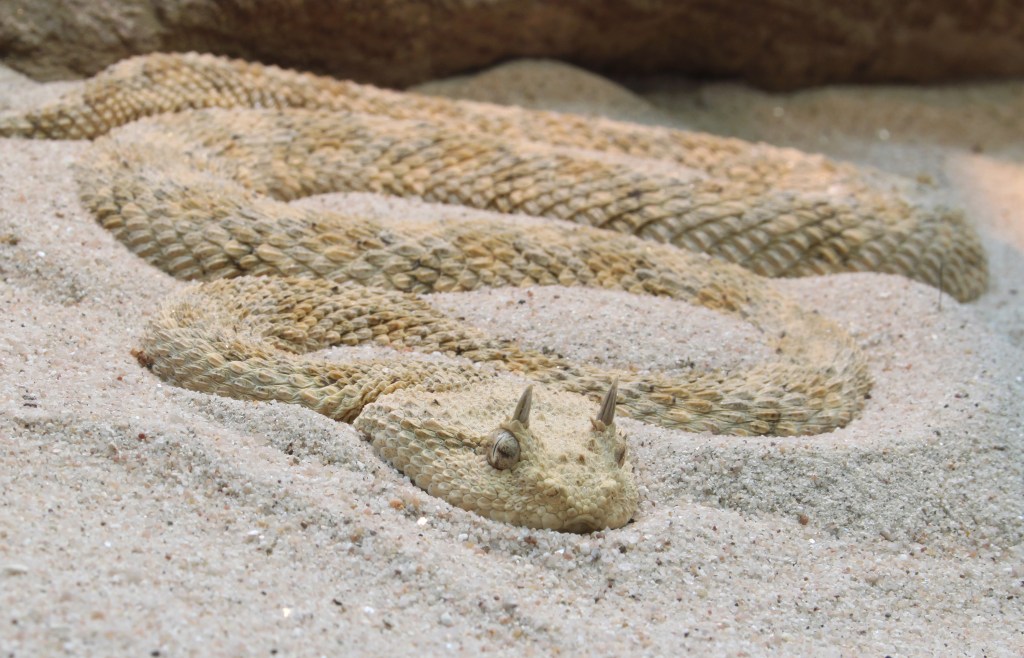
I love this week’s weird little story about Moses raising the bronze serpent in the desert, with the people gazing on that image of the venom coursing through their own veins to live. Those grumbling, never-happy Israelites: they are My People. I’m right with them more often than not, lost in the desert, complaining about everyone and everything making my life a mess, right up until my venomous self bites me back.
For example, just this week, I was ticked off at my college composition class because none of them turned in their essays on the due date. I stress deadlines because I need to get papers graded on a schedule; they’re messing with my week, I fumed. And then, checking online one more time—just to really stew about how Not Even One—I realized that I had never opened the paper dropbox.
So we all make mistakes. And my first thought was –shoot, I better fix that and let them know I forgot so that they can get those papers in. But my next thought was, Well, I’m not going to apologize! They are supposed to be responsible! One of them should have emailed me to tell me. Staying in touch with your teacher is what a good student does! They need to learn that! In the moment, that actually felt like sound teacher logic instead of what it was: self-justification, a stab at putting my embarrassment at my mistake, my own lack of responsibility, off on someone else–or in my case, a dozen someone elses. In other words, “There’s no food! Oh wait, there’s manna. But that food is terrible! Your fault.”
I usually catch myself before I inflict my venomous thoughts on my students, but there have been times when the serpent bit, and the poison went deeper. A friend didn’t call or excluded me from an invite or hurt me in some other way, and I let that hurt fester in my veins. Eventually, I’d ask God for help, which didn’t immediately stop the poison so much as help me step out of myself to observe the serpent at work inside, to see what was really biting me—my own poisonous imagination. This didn’t always completely heal the hurt, but it kept the poison from spreading. Over the years, too, I’ve learned that the explanations I come up with for others’ actions are nearly always wrong. That people are complicated and never what my fear and insecurity project onto them.
All of this brings me to today’s Gospel. `Jesus tells his followers that the Son of Man will be lifted up just like Moses lifted the serpent in the desert so that they will live. And as we who hear the story of Christ’s Passion every year know, by the end of the story, everyone—the Roman occupiers, the religious authorities, those who flocked to see him, and his closest friends — are all part of why that happens, why Jesus ends up on that cross.
Too often, we think of sin and salvation as some kind of Galactic opposition: Darth Vader vs. Luke Skywalker; evil versus good Republican vs. Democrat; dark versus light; Christian vs. Muslim; condemned vs. saved; Pharisee versus disciple. But it seems to me that sin, actually, is just every day choosing to see icky white sap in the sand where we could see manna, our daily bread; choosing not to acknowledge our own mistakes and put them right; taking our fears and insecurities and putting them on someone else to carry.
This past Friday’s Virtual Prayer Tent, Healing our City, where people are praying each morning throughout Derek Chauvin’s trial, featured a young ministry student, Menzi Mkambule, from the Kingdom of Eswatini in southern Africa. After offering a Lament of Racism in the U.S. and the world, Menzi reflected on two words from his language: sawubona—I see you—and ubuntu—I am, because you are.
Menzi’s explanation of ubuntu and sawubona helps me understand how the mental gymnastics I go through blaming other people for my own stuff can, in Jesus’ words, keep me from the light. All of that self-righteousness keeps me from seeing others as God’s beloved children, and thus from the work of the kingdom. As Paul tells us in today’s second lesson, “For we are what he has made us, created in Christ Jesus for good works, which God prepared beforehand to be our way of life.” In other words, we don’t do good works to be saved or to prove we are better than those sinners over there who need our help: we act justly and kindly because of ubuntu; because in God’s kingdom, I am, only because you are.
This is the heart of the work of racial reconciliation and of all the work we are called to do as Christians. Our work is not to condemn one another—to name some people as righteous and others as evil. According to Menzi, ubuntu is about recognizing God’s image in everyone and then advocating for one another. I am because you are: invited by the Spirit to see you, to hear your stories, and to choose loving relationship; invited to let all of the poisonous fears, comparisons and self-doubts that drive me to protect my own power and to put my own missteps on others’ shoulders dissolve; invited to shed that serpent’s skin and live.

 Sunday Morning Words
Menzi’s words are powerful to me. Thank you.
LikeLike