

I was raised as a Roman Catholic, a tradition I eventually left but that formed me and kept me faithful for many years.
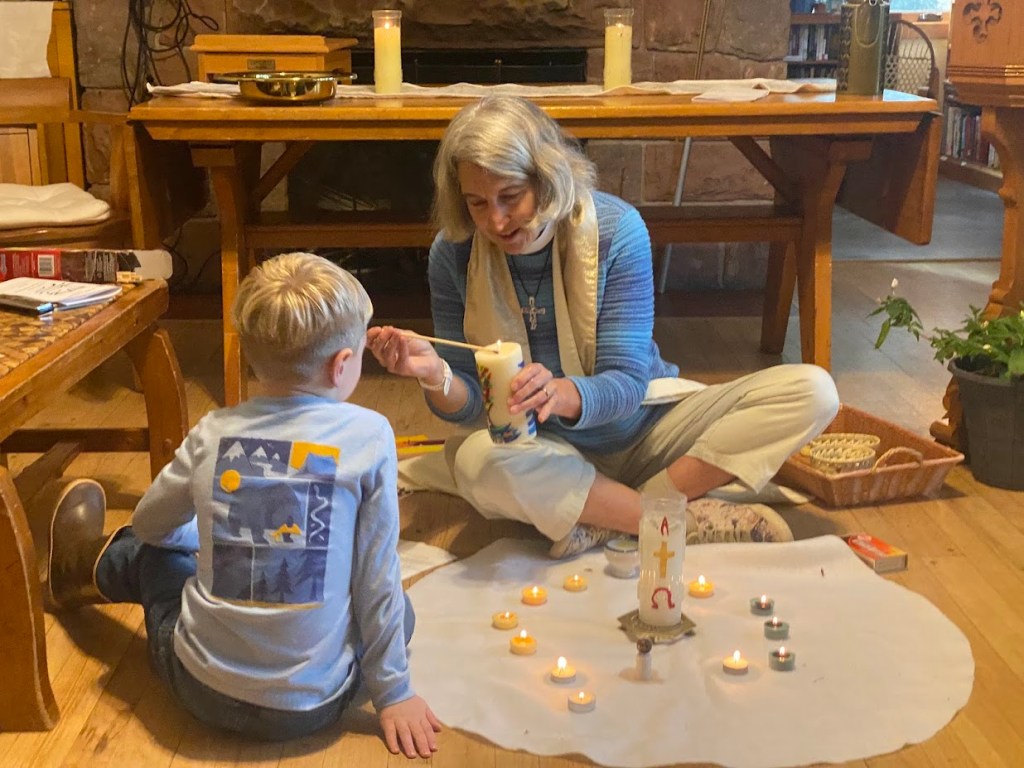
I’ve often credited my parents for that. My mother, supported by my dad, made sure that faith was part of our home life in concrete ways that I loved as a child and that inspired many of St. Mary’s intergenerational activities: walking Mary and Joseph toward the manger, posting our thanksgivings, laments, and prayers on the windows and walls, chalking the doors at Epiphany.
It was the music, though, that I think shaped my faith most deeply. I grew up in the seventies, the decade of folk masses and hip new hymns by the St. Louis Jesuits; we’ll sing an enduring favorite, “One Bread, One Body,” during communion this week. When I sing, words sink into my bones, and those childhood hymns embedded in me a faith centered on loving God and my neighbors. Each week, we’d sing about God’s enduring love, presence in times of trouble, and welcome for all: Gentile or Jew, servant or free, woman or man no more in Sunday’s hymn and the body Paul describes so beautifully in the first lesson.
I’ve spent this week reflecting on how God’s name has been used throughout this election season, including the recent Inauguration events. Like many of you, I was moved by the way Episcopal Bishop Marion Budde humbly asked our new President to show mercy to those who were afraid at the Service of Prayer for the Nation, and I wasn’t surprised by how her words were received.
If you, with Bishop Budde, believe deeply in the message of this week’s Gospel, that Jesus brings good news to the poor, release of captives, recovery of sight to the blind, and freedom to the oppressed; if, like Bishop Budde, you recognize that the poor, the captives, and the oppressed are real people living in our country, whose lives are way more precarious and challenging than yours; and if you try to serve those people through your words and actions, you’re going to piss off people in power: people who often find it useful to fill us with scorn for the poor, to encourage the desire for other’s captivity in the name of safety, and to benefit financially from oppressing others.
That scorn, that desire to shut up people who make us feel uneasy, that insatiable desire for wealth is built into the bones of every prosperous nation and every political party. If we’re honest, we’ll find those things embedded in small ways in our own thoughts and actions most days. It’s the nature of sin–from Cain and Abel to the Crucifixion of Jesus to the Corinthians in Paul’s time to the current vilification of LBGTQ folks, migrants, and people we don’t know on social media–to hurt others for our own gain.
But there is this other Way, a song embedded even deeper in our bones. It sings that you and I are each God’s uniquely beloved child. It sings that no matter where they come from or how they live, everyone else is just as beloved by God as we are. Its verses tell us about help for the poor, release from what holds us captive, and the endless beauty of God’s will. It sings, as we did this Sunday, that we are one body in this one Lord. This Way sings in our sinews that God’s mercy and endless compassion extend to every person and every nation (yes, even the ones who piss us off). It invites us to find a way each day to share that mercy and compassion with those who need it most, right here, where our voice, our hands, and our feet are.


 Sunday Morning Words