Easter 2: Faith and Doubt

When I was a freshman at the University of Virginia, fresh out of Catholic high school, I took a religion class called Faith and Doubt.  My mother encouraged me to sign up for it–college was a time to learn about different ideas and beliefs, she said. 

But that fall, when I read those new ideas in the books assigned for that class, I was lost.  I was a good reader, but the language was dense and difficult, and the ideas were utterly foreign.  I tried using the tools that I had–a very traditional, Catholic understanding of God–to help me understand what Nietzche, Hume, and others were saying, but I ended up stuffing those writers into a religious container they did not fit.  I  scraped through that class with a low B, but it took another decade before I understood those ideas that were so different from what I knew.   

That experience is as close as I’ve come to how Thomas might have felt in today’s Gospel.  Days before Jesus’s death, Thomas had given up all hope of the Messiah who would rescue them from the Romans while remaining loyal to his teacher, saying, “Let’s also go–we might as well die with him.” After that display of loyalty, he’s not around the day Jesus appears to the disciples.  Given all that’s happened and changed that week, it’s not surprising that Thomas refuses to believe until he can see Jesus’s wounds for himself.  

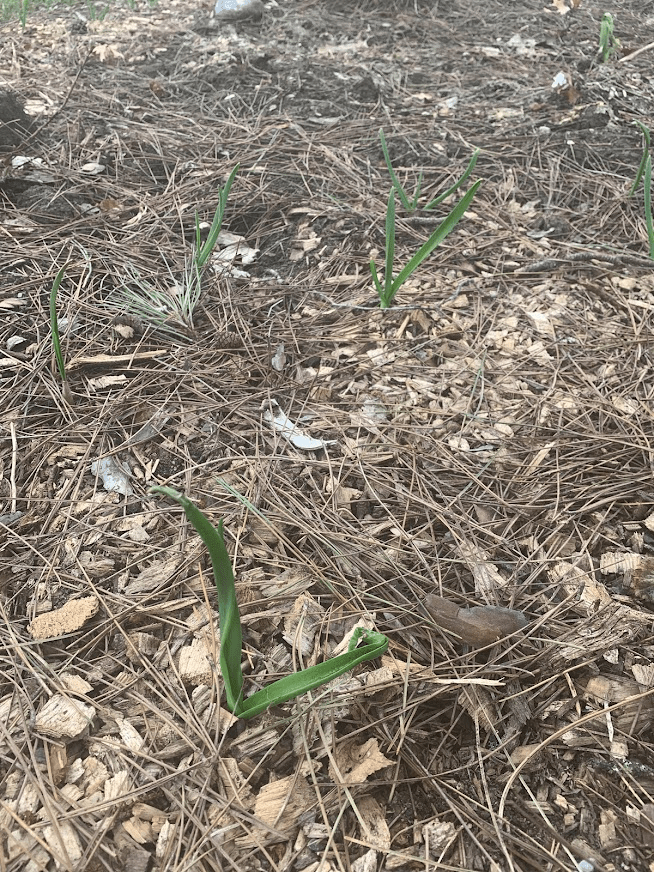
It’s hard, sometimes,  to see what’s new.  The new things we already know–new babies, new sprouts of daffodils and garlic pushing up through the cold spring soil–are easy to see, understand, and celebrate. What throws us are the new things that unsettle how we’ve always understood something.   Five hundred years ago, it was hard to believe that the Earth is round and revolves around the sun; three years ago, it was hard to fathom how a tiny virus could multiply, spread wildly through the air and kill so many people.   When faced with new truths, ideas that shake our core knowledge of how things work, it’s easier and completely human to sometimes just refuse to believe. 

Still, viruses and the shape and trajectory of Earth can be proven over time, using tools that make it possible for our eyes to see the truth. No tool is ever going to be able to prove that the Resurrection is real.

In fact, believing that Christ rose from the dead can mean putting aside what science and our lived experience teach us.  Even the creeds and other statements Christians have come up with over time to define our beliefs don’t explain the mystery of it all.

Jesus’s body disappears from the tomb, but when he reappears, he doesn’t look the same.  He appears and disappears in locked rooms like a ghost.  He invites Thomas to put his hand in his wounds.  But when Mary reaches for him, he tells her not to hold on to him.  He speaks, walks, and eats with people, and as soon as they recognize him, he disappears again.  Even the people who see it don’t really understand what’s happening.-  Like 18-year-old me, they don’t have a religious container big enough to fit it in.  All they can do is witness. 

Every year I consider all those things and wonder why I still believe in the Risen Christ.  Is it the force of habit? Is it easier and more comfortable for me to believe–to keep stuffing the horror and suffering and pain of this world into a container called Christ, so that I can believe Peter when he tells us in today’s lesson that everything will be okay in the end?   

Honestly?  That is probably some of why I believe. But there’s more too. All my life, a part of me will still be that college freshman who just doesn’t get it.  But now I know that what I can’t comprehend with my head, I can come to understand in other ways.  

People who hope against all odds help me understand the Resurrection.  People who work at impossible problems, finding ways to heal the earth and restore the environment.  People who love the marginalized people around them the way that Jesus loved.  People who experience terrible suffering and still believe God’s love surrounds them. 

The stories of Jesus, healing people who are broken and filling hungry people with food and living water, help me too.  I hear Resurrection in the parables he told about mustard seeds and prodigal sons. The Bible is filled with stories that teach me the endless rhythm and joyful song of suffering that is healed, of birth, death, and rebirth.  

I believe in Resurrection because I choose those people and those stories, that Way of Love, that new kind of life.  In it all, Christ is Risen.

He is risen indeed.  

Advent 1: No Last Chances

This past Monday, I walked into my class and wrote on the whiteboard

Last Chance U, English Edition 

This is it!

Get going.

The three guys who had bothered to come to class a minute or two early looked at me.

“Ms. G., how d’you know ‘bout Last Chance U?”

“Umm. Because I’ve worked there for 30 years?”

They nodded.  True enough. “So what’s that mean?”

As the rest of the class slowly trickled in, I explained the rules.  We had two days of class before break.  For each of them, I’d listed a set of missing assignments on sticky notes. If they came to class those two days,  they could make the work up without penalty, and bring their grades up to A’s or B’s or passing.  

One of them, a tall beanpole of a basketball paper whose grade had vacillated between an F and a D all semester (they need a C to pass) jumped out of his seat and threw his hands out.  

“Ms. G!  I can’t believe it!  Can I hug you?!!”

He could.  One quick hug later,  he settled down and got to his list.  After two classes and an hour or so of help after class, he pulled his grade up–if he stays on the path for the next two weeks–to that C he needs to stay in school and on the team.  

Advent is my favorite church season  Ever since I was a little girl,  each night as we gathered for dinner, the dark of winter firmly settled outside the window, lighting the candles on the wreath has felt like hope and promise: Christmas is around the corner; the growing darkness will not last; the light is coming.

And each year, the Advent readings do their level best to kill my buzz.  This week, it’s Isaiah’s thrones of judgment, Paul turning light into armor, and Jesus, near the end of his life, going on about the Son of Man, coming like the floods came for the people around Noah, taking one with him and leaving another behind.  Advent, it turns out, is as much about keeping awake for the second coming of Christ as it is getting ready for the joy-filled arrival of a baby in the city of Bethlehem.  We only have four weeks, I’ve always protested inside; isn’t it enough to just get ready for the Incarnation?

Maybe. But maybe it’s not.

This has been a long semester of watching students fail. My class, they all admit, is not hard if they just hunker down in class and do the work.  Even so, they come to class twenty minutes late or leave early because their laptop is out of battery, so they can’t write. They get their grade to a B and disappear for a week.  They start on an essay and never turn it in.  It’s the same every year; at the end of the semester, a few will move on to college-level classes, and too many, like the men and women in Jesus’ parable, will be left behind. 

Still, that’s not why I held Last Chance U, English Edition this week.  It’s not why every week, I stay after class, teaching stuff I swore an hour before that I would not teach because you were not listening.    I stay because my students are genuinely, exasperatingly, a joy to be around.  Because when my mother died this semester, they knew exactly what to say to me.  Because at least once every semester, when I’m working with them, they get what I’m saying and say, “Hold on, this doesn’t make sense at all” and write a sentence full of such elegance and power.  Because when they fail, they often try again and go on to graduate and help communities I never could. Because sometimes they leave but still see something new in themselves. ‘

They are God’s people, and God’s people screw up, don’t live up to their promises, and don’t do as they are supposed to. And so maybe Advent needs to be about the next time God comes to earth as much as it is about Jesus’s Incarnation, because for God’s people, one chance to get things right is never enough. Yet in the story that stretches from Genesis to Revelation, God never gives up on them: God–like a frustrated teacher at an open-enrollment college–showing the way to get the work done, warning of the consequences of not following the path, but always relenting, offering another chance, always seeing the promise in the people before them. 

Maybe the Son of Many is always coming down, not just in some win-or-lose end time, but through Isaiah bringing hope to the people,  Jesus born on a dark night, Jesus rising from the dead, the Holy Spirit blowing around frightened disciples in a locked room, Martin Luther King sitting in jail and setting the world on fire for justice.  Maybe the Son of Man will just keep coming until none of us are left behind.   Maybe that’s the promise of Advent, the light that no darkness can extinguish.  

Shared Worship 2022: The Mustard Seed

18 So Jesus said, ‘What is God’s kingdom like? What shall we compare it with? 19 It’s like a mustard seed that someone took and placed in his garden. It grew, and became a tree, and the birds of the sky made nests in its branches.’  20 And again he said, ‘What shall we say God’s kingdom is like? 21 It’s like leaven that a woman took and hid in three measures of flour, until the whole thing was leavened.’

At the place in the Gospel of Luke when we hear this parable of the mustard seed,  things are starting to heat up for Jesus.  There’s the usual threat of Roman rulers who ruthlessly punish anyone they considered an enemy of the state.  But now many religious leaders are getting riled up as well.  They’re afraid of what might come their way from the Romans as more and more people start calling this guy Jesus the  Messiah, the one who will restore their kingdom.  And then there’s Jesus’s annoying habit of healing people on the Sabbath and otherwise just not showing a lot of respect for the way good, religious people had always done things. For all those reasons, at this point in the Gospel, they’re doing their best to discredit and get rid of him.  

Also at this time, there is a huge split between the affluent folks who mostly go along with the Roman authorities and the working folk barely getting by.  And so many others are living on the fringes of both of those groups, marginalized because of poverty, mental illness, and chronic disease.  

People are divided. The rich are getting richer. The poor are getting poorer. The personal attacks are getting uglier. 

Sound familiar?

In the midst of all of that trouble, Jesus takes a different way.   Yes, speaking out strongly, angrily even, against those leaders who hold so tightly to their own power and authority that they can’t see the Spirit of God at work right in front of them.   

 Mostly, though, Jesus just pays attention, seeing and reaching out to the people everyone else would rather ignore. He heals them and feeds them and fills them with words of hope. But his words of hope aren’t centered on any of the stuff–the power, the wealth, the influence–that everyone is fighting over.  

All of that stuff that angers and divides and fills people with fear?  It just doesn’t matter to Jesus.  It’s a distraction from what matters most.  It keeps them–and us–from God’s kingdom.

The kingdom that is like…a  mustard seed?

Mustard seeds–at least the ones in the Middle East that Jesus knew–are tiny, almost invisible to the human eye.  But when they are planted, they grow rapidly–often taking only a day to send up a green sprout.  In one growing season, they can grow up to 10 feet tall, with stems so thick and woody, they can be mistaken for trees.

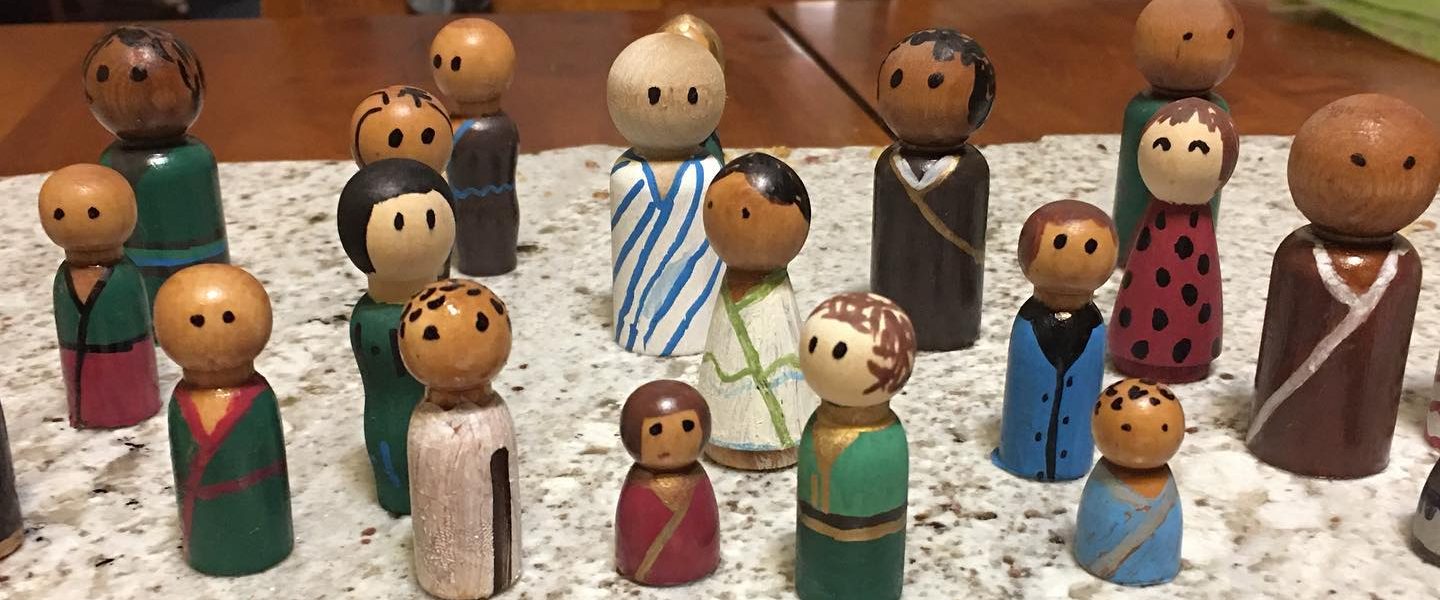
This week, I’ve spent a lot of time thinking about those mustard seeds that Jesus says are like the kingdom and wondering, as we say in Godly Play, what they could really be.  

At first, I thought that the mustard seed might really be my friend who wanted to plant trees where some of our boulevard trees had been cut down and–while the rest of us worried about ordinances and City Council and public opinion–found the number of the guy who knows about planting city trees at the University of Minnesota–the director, as it happened, of their urban forestry program.  That phone call grew into a grant for three truckloads of trees, a gravel bed to start them in, and folks to show us how to plant and care for them–and now, hundreds of young trees have begun to shade us as we walk and rest under their branches in our parks and by our sidewalks.

I parented three children in this town with a community of other adults supporting me and loving them. So I began to think about how the mustard seed might really be the mom or two (or four) I know who sit in one or two (or four) of our churches on Sundays.  Moms who saw a child looking lost, different, on the margins, and quietly took those children into their nests and under their wings–children I’ve seen grow into strong, healthy adults who know from their cores how to love others and themselves.

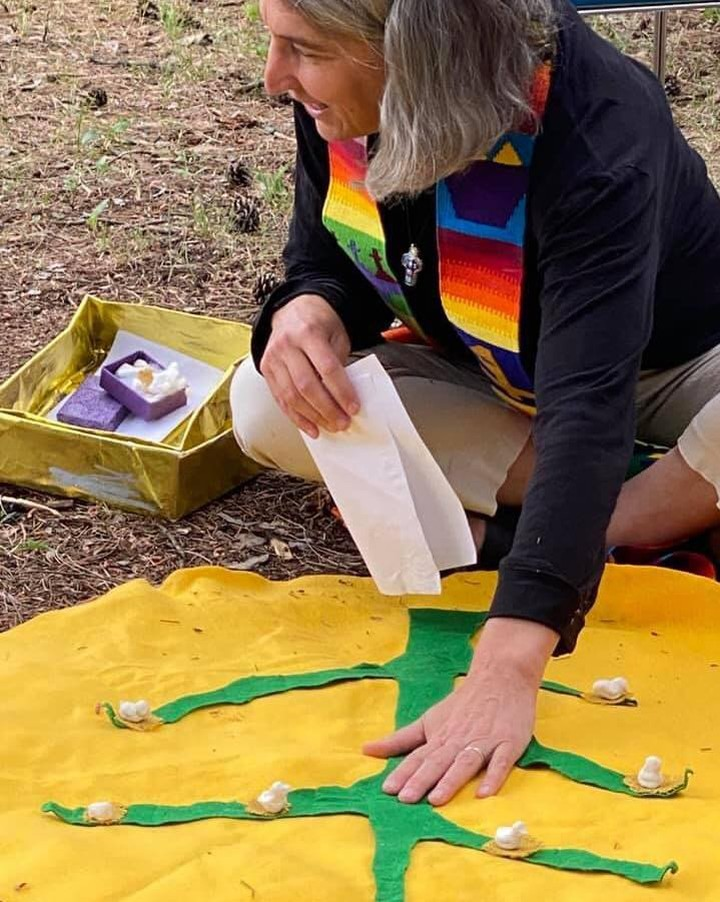
The mustard seed might even be the people in four churches who used to come together once a summer on the street outside one of their buildings to share a meal together. Folks who decided one year that maybe they could leave their buildings and their differences even further behind that day to worship their God together.  And that mustard tree looks just like this.

I wonder where you see those mustard seed growing?

Here’s something I think Jesus might be telling us through the parable of the mustard seed. God’s kingdom isn’t about the stuff that divides us.  God’s kingdom is a thing apart from and bigger than that.  Its seeds grow when we pay attention to the people and the natural world and the communities around us–especially the people and places and spaces that make us feel uncomfortable, where we prefer not to go or even look. God’s kingdom grows when we choose to take those seeds and tend them in our gardens.  Jesus is telling us too, despite all the anger and violence and hopelessness that whirls around us, to never underestimate how big and strong those seeds can grow. And once we make space for them in our garden, to not underestimate how many will come–from the north, he says, the east, the west, the south—to rest in their shade and find peace.

(Video below begins with the Godly Play lesson, followed by this sermon)

Lent 2/Lent3: What We Sacrifice

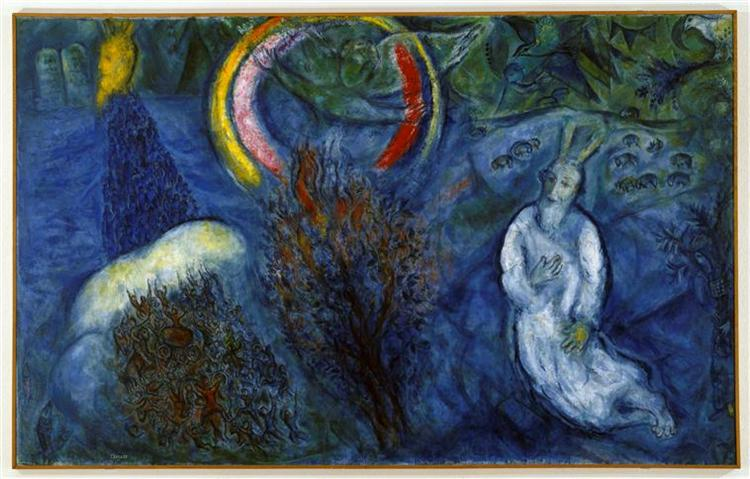
Moses with the Burning Bush, Marc Chagall

One thing I love best about St. Mary’s is the way someone (usually under 12) blindsides me with a question that I don’t have a good answer to.  Last week, it was a question at the end of our reflection time about why Abram (or anyone really) would be sacrificing animals to God. My answer at the time, “Well, because that’s what people did back then,” was both accurate and way too easy. Here’s another go.

When it comes to understanding deeply complex stuff like suffering and love and commitment, we often need something concrete to anchor our thoughts and focus our energy and attention.  It’s a reason why we create rituals: saying grace before dinner or writing our faults on rocks before the confession at church.  It’s a reason for sacraments (outward signs of invisible graces): sharing bread and wine at communion,  pouring water on someone’s head at baptism,  the laying on of hands at ordination or confirmation.  The ritual or rite matters, not in itself but because it points us toward something more profound than words can express, or our brains can fully fathom.

I think sacrifice was also meant to do this. Faced with great joy or great need, the sacrificer took time away from the ordinary busyness of a day to make a special bread or cull an unblemished animal from their herds and give it reverently to Yahweh, in order to express something too deep for words. And so, in his anger and grief over his continued childlessness, Abram carefully prepares a sacrifice and spends the whole day driving off birds of prey. When he finally falls asleep, a “deep and terrifying darkness falls on him.” There, as he lies submerged in that sea of anxiety and despair, God comes to him in smoke and flame, and this time, Abram’s finally able to stop arguing and listen.  

There are other means as well. In the first reading for the third week of Lent Moses wanders around in the desert tending his father-in-law’s sheep, years after he ran away from Egypt because he killed one of Pharoah’s soldiers for his cruel abuse of an Israelite man.  It takes a burning bush for Yahweh to catch his attention and send him back to Egypt.  So much of the history of God’s people depends on Moses’ metanoia–change of mind–sparked by that strange fire in the desert. 

But there’s a flip side to how we use sacrifice, rituals, and burning bushes.  Sometimes, the thing that is intended to help us find our way becomes an end, not a means. We hold on to rituals in government (electoral college, anyone?) or in church just because that’s the way we’ve always done it.  

Things really go south, though, when a ritual or happening leads to people justifying the suffering or exclusion of others. So a church teaches that without a correctly conducted baptism, a person will go to hell or cannot fully participate in the church.  Or I hear someone has a cancer diagnosis and start making a mental list of all the things that person did that caused it.  In the Lent 3 Gospel, people are convinced that a group of Galileans–brutally murdered by Roman soldiers on the temple altar, their blood mixed with the sacrifices–must have done something deeply wrong to deserve such a horrifying death.

When we seek to explain why bad things happen to other people, we’re usually not doing that out of concern for them, but for ourselves.   If I can pin down a concrete reason why people suffer, I can control it and reassure myself it won’t happen to me.  Jesus sees his questioners’ desire to blame the Galileans as a way to distract from looking at their own “terrifying darkness.”

So Jesus tells them to repent: to stop asking the wrong questions and, like Abram, to face the darkness inside; to see, like Moses, what they are running away from.  And he’s also reminding them of the other meaning of the word translated here as repent: metanoia.  He’s asking them to change their minds, to reset their perspective. He’s reminding them of what the prophets have told them repeatedly: that the heart and purpose of sacrifice lie in doing justice, loving kindness, and walking humbly with their God.  This is the kind of deep, real sacrifice that Jesus practices every day as he heals and prays and teaches and casts out demons. It’s the sacrifice that heads him, steady and unflinching,  toward Jerusalem, toward the cross, and beyond.

Lent 1: The Wilderness Is Real

Welcome to Lent!  This Sunday, we heard the story of the temptation of Jesus through the Godly Play, as we do each year on this day. You remember the story: after 40 days (in Bible speak, 40=a really long time when bad stuff happens) wandering in the wilderness, Jesus–exhausted, hungry, and thirsty–gets grilled by the devil three times. 

It’s important to remember that these 40 days in the desert  begin with Jesus’s baptism, with the Spirit of God descending from the heavens, surrounding Jesus with the blessing, “You are my Son, the Beloved; with you, I am well pleased.”  Last week, we heard those words one more time on a mountaintop, just before Jesus starts his final walk to Jerusalem.  Both times, God is blessing and holding Jesus close right before Jesus heads off into danger.  A related blessing and holding is there for us all in Psalm 91, where God promises to be there in our trouble, to bear it with us and deliver us out of it–but not to keep us out of it.

That’s tricky, right?  The Spirit fills Jesus with blessing, naming him God’s beloved, and then that same Spirit sends him out to starve and thirst the wilderness.  There, the devil tempts Jesus to do something to prove the Spirit is really with him, quoting some of the best-loved words in Psalm 91: “[God] will command his angels concerning you, to protect you… On their hands, they will bear you up, so that you will not dash your foot against a stone.”  

In Matthew and Mark, the temptation story ends with the devil departing and those angels, sure enough, waiting on Jesus, but Luke doesn’t give us that satisfaction. Because the angels aren’t the point; as Jesus says, the wilderness isn’t a test to prove God is real.  The wilderness is where God gets real. And it’s where Jesus, filled this time with the power of the Spirit, is sent out again: ready now to preach, teach and heal and, ultimately, to die on a cross.

I’m not sure why I find all of this comforting, but I do.  Because you know what? Life is hard. Bad stuff happens–sometimes awful, painful, 400-days-in-a-desert level stuff that sears the soul. And while we might sometimes wish for a God that created a world where nothing that bad ever happens or where God would just yank us out of danger like a protective parent, that’s not how things work.  

Instead, we live in a world where, when we hurt as we all will, one day or another, God is always there with us–blessing us, covering us with love, rescuing us, healing our wounds–and then, also, delivering us, driving us out to tend to the woundedness of the world around us.  Because in this world, God makes us, like Jesus, part of the rescue plan. 

Epiphany 7: Forgive Who?

Jesus’s sermon on the plain continues this week as he dives into loving neighbors–like ALL our neighbors.  Jesus is speaking to “those who will listen,”  maybe because a  bunch of the rich, full, and laughing folks took off in a huff after hearing last week’s blessings and woes.  Now, though, he seems to be turning on the poor, hungry, and weeping he’s just promised will feel the fullness of God’s love.  How?  By blessing those who curse them, giving away more than is taken from them, and forgiving and loving the people who cause their suffering.  Say what?

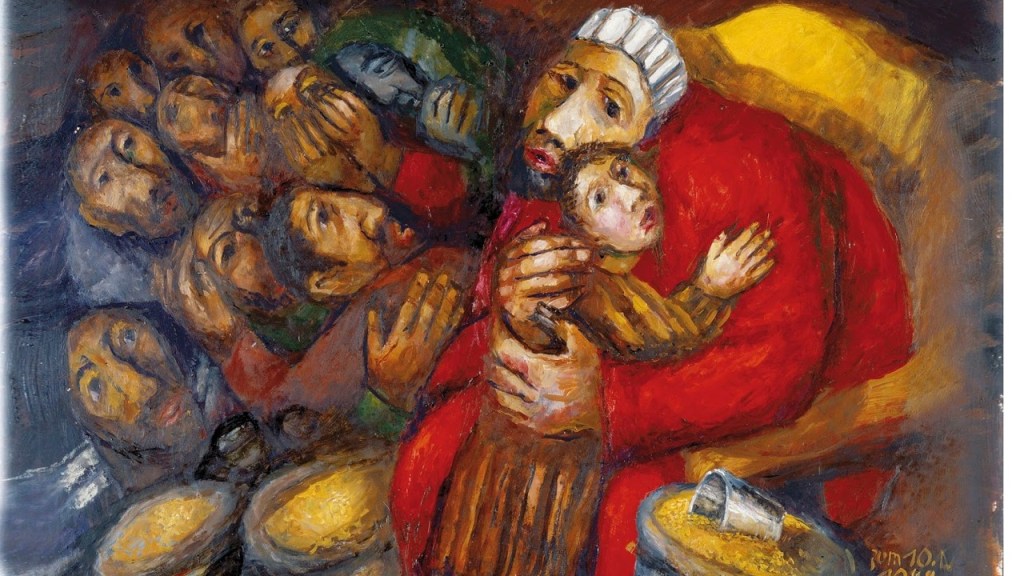
Sieger Köder’s depiction of Joseph, reunited with his brothers

In a neat parallel, the first lesson this week focuses on the end of the story of Joseph, where he forgives the brothers who sold him into slavery. It’s worth reading that story from the beginning (grab a cup of coffee; it’s a saga!) to understand all that needs to be forgiven on all sides in that story for that happy ending in the lectionary to happen. And even then, folks at church today agreed that there was a LOT of talking left to do after the kissing and weeping. Forgiveness is not cheap.

As Christians, we need to read both of these passages with care.   Jesus is not saying that loving our enemies means meekly accepting whatever cruelty people stronger than us might choose to inflict.  God doesn’t impose years of hardship on Joseph in order to bring about good. And God definitely wants us to confront injustice and suffering when and where we see it. 

Still, the God we believe in has a radical, absolute, limitless love: a Love that continually forgives us and, yeah, sorry, those we see as most unforgivable.   And, somehow, the worst that life has to offer is also often the place where we find the heart of that agape love.

Loving my enemy, forgiving those who harm me is complicated and tricky work.  But as Annie Lamott puts it, not forgiving someone is like drinking rat poison and then waiting for the rat to die.  I’m not going to lie. Sometimes I drink the poison anyway.  But I know that it’s forgiving that will heal me in the end,   forgiveness that heals the wounded and the wounder, forgiveness that opens up space for each of us to be wholly who we are created to be.

Epiphany 3: Greater Gifts

In this Sunday’s Gospel, Jesus heads back to Nazareth for the first time after being baptized in the Jordan River and spending 40 days in the desert with no one but Satan for company.

Since then, Jesus, filled with the Spirit, has been teaching and healing throughout Galilee and, Luke reports, is praised wherever he goes. The hometown folks must have been buzzing with the news as they crowded into the synagogue that day. It was customary to ask a man from the gathered community to go to the front of the room, read from the scrolls, and deliver his thoughts on Scripture. So it’s not surprising that they would have asked Jesus to take his turn that week.   

The relationship of those folks to Scripture was a living thing, different in many ways from our relationship to the Bible today. The stories they told and retold–of Adam and Eve, Noah and the Flood, Joseph and Moses in Egypt, King David, Elijah and the other prophets–seeped deeply into their bones. In those stories, the past and present and future came together. Yahweh came to them over and over in different times and places, but always the same: forgiving their lousy behavior; rescuing them from slavery, imprisonment, and hardship; offering bread and water to those who were hungry and thirsty; promising new life and fulfilling those promises. They made sense of their lives through those stories. They expected prophecies to be fulfilled in the past, in the future, and perhaps in the present. In Jesus’ time, for example, they are actively looking for the Messiah who had been prophesied for thousands of years.  

So I think that maybe they crowded into the synagogue that day precisely because they wondered: could this boy, the one they’d known all their lives, be the one?

So what is it about his words–about Jesus himself–that leaves them silent, staring, speechless, and (spoiler for next week) then fills them with doubt and rage? If you were there, sitting on a synagogue bench that day, what would you think about his choice of Scripture? What would you feel as he silently returned the scroll to its place, sat down in his seat, and then, with everyone’s eyes fixed on him, announced that he was the Scripture,  sitting there beside you?

In today’s first lesson, Paul implores the Corinthians to see each of the many and diverse gifts of the community as equally important to the whole. The Corinthians—like every human on earth ever—have been jockeying over who is most important and having a difficult time honoring people whose gifts they see as weak. I wonder if Jesus is facing this kind of skepticism as well, both because of his humble roots and because he’s claiming the weakest and the poorest–not the hometown folks sitting in the synagogue with him–are God’s priority. 

Also…suppose the Corinthians really start to believe that everyone with their different gifts is essential to the whole and that it’s their life’s work to use those gifts together, one body, drinking of one Spirit. Suppose the people of Nazareth really start to believe that Jesus, son of Joseph the carpenter, is the Messiah, announcing release from the way things have always been, beginning with those even worse off than they are. Suppose I really believed those things. Suppose we believed them together. What happens then?

Relentless Abiding, Relentless Love

This fall, our Bishop, Craig Loya, has been asking the whole diocese to engage in Gospel-Based discipleship around one text–Jesus’s metaphor of the vine and branches in the Gospel of John. This time of Scripture study is always followed by a brief prayer practice, usually involving some kind of centering prayer.

I’m grateful to have a Bishop who practices what he preaches and makes sure our gatherings always begin with Scripture and prayer. But, gotta be honest, repetition has never been my favorite, and lately, I’ve been feeling like I’ve had enough of branches thrown into the fire and all that relentless abiding. And (full disclosure) when the prayer practice leader on Zoom tells me, again, to close my eyes and ground my feet on the floor, more often than not I turn off my video and refill my coffee cup (walking meditation’s good, right?)

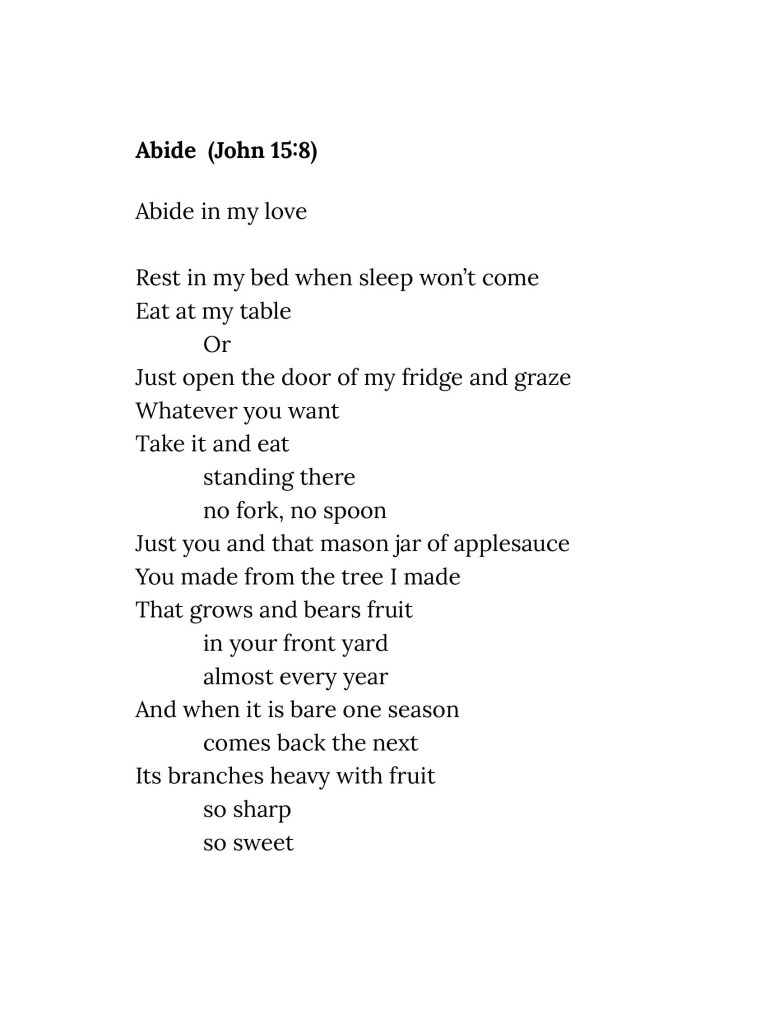
Yesterday, though, the prayer leader in our morning meeting invited us to do something different. “Put the word abide on a piece of paper,” she said, “and write a poem. Whatever comes to you.” The Zoom screen lit up with people scribbling. And as tired as I was of Jesus and his vines, all those weeks of abiding in Jesus’s love clicked for me as well.

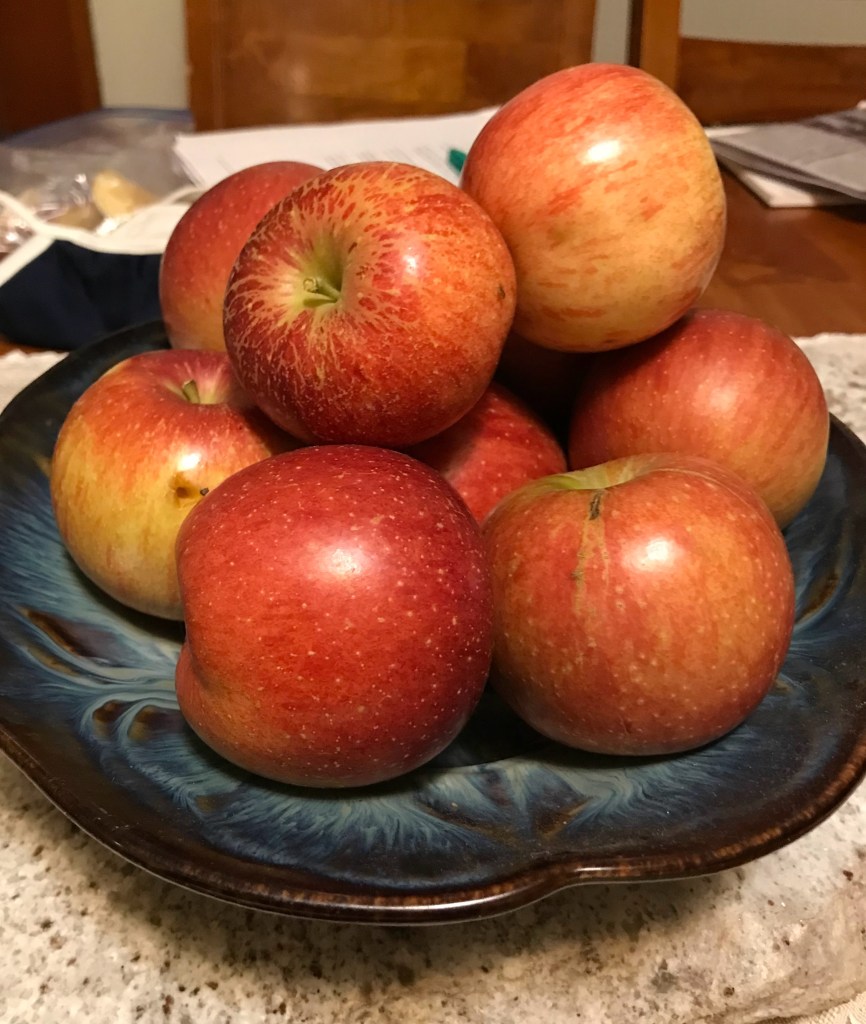
Except it was not the grapevine but our front yard apple tree, the one that gifted us this fall with bushels of sweet, juicy apples that came to mind, all mixed up with so many relationships: the vine and the branches, mother and child, God’s many rooms and my home, the pandemic and its end, Mother Earth and Mother God, the Spirit and us.

Prayer and God’s Word, tedium and time, and the Spirit’s slow and invisible tending to the soul, bearing its fruit.

Pentecost 20: Making Room

I have a strange relationship with my stuff.  Partly out of concern for global waste and the environment, and probably because I grew up with a frugal mom, most of my clothes, furniture, books, and household goods are second-hand.  But even though (or maybe because) we don’t have a lot of new stuff, we still have way too much of it..  

Because someone before me owned the stuff I own, you’d think I’d find it easy to pass it on, but I don’t. What if they just throw it away?  I think.  I might need itMaybe Phoebe will want that.  I should save that for when kids come to visit.

And yet, whenever I ignore those voices and pack up a box of stuff I no longer need, the minute I drop it off and walk away, every time, I feel a lift.  I feel lighter, happier.  And yet, the next time I declutter, there it is again–that reluctance to let go of my Stuff.

So I read this week’s Gospel with compassion for the young man who comes to Jesus in today’s Gospel, owning everything he needs and yet, still searching for something more.  When Jesus tells him what he needs to do–sell your stuff and use the money to help the poor–he just can’t do it because his Stuff owns him, and there’s no room to let God into that mess.

You might be that person who, unlike me, loves to declutter and live with minimal possessions.  You might look at that rich man as just another incredibly wealthy, incredibly selfish person.   But every one of us has stuff we’re holding on to as tightly as the rich man holds on to his worldly goods, as tightly as I hold on to toys my kids haven’t touched for more than a decade.  I don’t know what that is for you, but I do hear Jesus telling me–us–sternly and lovingly:  hold on to that, and you’ve got no room for the Light to come in. 

We’ll read the Gospel this week against The Quiltmaker’s Gift, a book most of us probably know well because Elyite Gail de Marcken illustrated it.  The joy that the king finds when he learns to give up his stuff is a beautiful and hopeful take on the rich man’s story.   As Jesus says, all things are possible with God, and I love the way the king’s journey to joy begins by giving up just one marble. 

Sometimes, too, we learn to let go in another way, through the losses that we cannot choose. My favorite poem by Mary Oliver is perfect for this week as the maples lose their leaves, and many of us continue to live through the hard losses of this past year. 

In Blackwater Woods

Look, the trees
are turning
their own bodies
into pillars 

of light,
are giving off the rich
fragrance of cinnamon
and fulfillment, 

the long tapers
of cattails
are bursting and floating away over
the blue shoulders 

of the ponds,
and every pond,
no matter what its
name is, is 

nameless now.
Every year
everything
I have ever learned 

in my lifetime
leads back to this: the fires
and the black river of loss
whose other side 

is salvation,
whose meaning
none of us will ever know.
To live in this world 

you must be able
to do three things:
to love what is mortal;
to hold it 

against your bones knowing
your own life depends on it;
and, when the time comes to let it
go,
to let it go.

Pentecost 10: Where Is This Bread of Life?

After the Storm

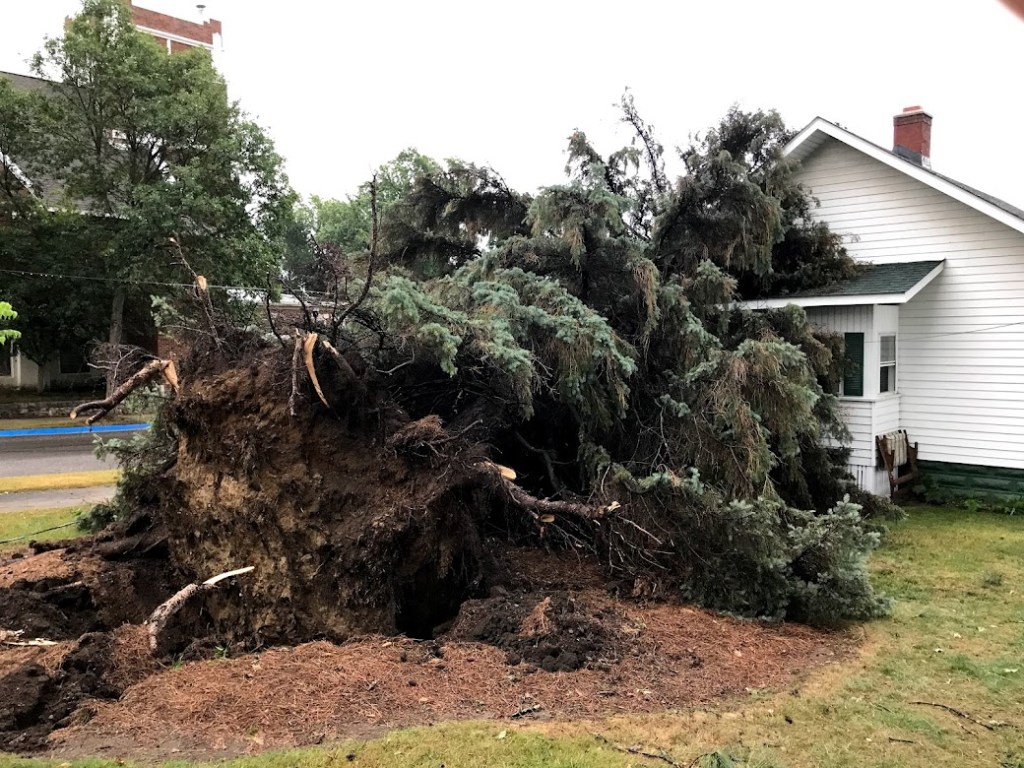
The week before the storm, all three of our children plus two girlfriends came home. For nearly a month before that, with Phoebe at camp, Will and I had our house and gardens and projects and selves to ourselves.  Having everyone together was the thing I was looking forward to and preparing for all that time–decluttering, painting, rearranging–making things comfortable and welcoming for everyone.

When they got here, it was lovely, and it was overwhelming.  There were meals to plan and food to buy, a BWCA trip to get ready for, new jobs and relocations to be hashed over, and so many bodies and voices where there had been quiet and space.

So  I could relate to Jesus in last week’s reading, getting everyone fed, listening to the clamor for a while, then taking off by himself to the mountain.  The immediacy of the need of those around us can be exhausting, even when it’s the people we love best in all the world and want most to be with.  

Then, later in the week, the storm with its 60 mph flat line winds hit, and the 100-year-old tree that had just that afternoon offered me a few hours of shade,  privacy, and quiet fell within five minutes of a boulevard tree out front.  And two of those people I loved best were in the BWCA, maybe being hit by those same winds.  The fear and worry and grief were overwhelming. I switched sides, now relating to those clamoring people running after Jesus, demanding answers:  Where were you? What are you going to do now?  What do I do next so that nothing goes wrong?  How do I know we’ll be safe?

To which Jesus says,  “Just believe in me.”

Okay…but ….believe in what exactly? How do I do that? Will that solve all of this?  Will I feel safe then?

Jesus wasn’t making deals with the people of his time, and he wasn’t making deals with me.  No slick promises, no magically resurrecting my tree, no miraculous multiplication of burgers to feed my hungry crew, not even a radar map to show me that my kids were safe.  

Instead,  “I’m the bread of life.  Here in front of you.  All you need.”

I”m going to be honest.  I’m a priest, but I don’t really understand that.  What it means to have Jesus, the bread of life, here.   How, exactly, believing in Jesus is going to take away all the weight and the worry.

In today’s Gospel and in the story from Exodus, the people of God are needy and anxious and not afraid to say so.  They want God’s help, but when they get it–when their bellies are filled–they’re still not satisfied. They immediately start worrying about where the next meal is going to come from.  This is understandable–these are folks living on the edge, barely sustaining themselves.  It makes sense that they want proof that God will help them, and they want to know precisely what they need to do to get what they want. They seek control, protection against their vulnerabilities — even slavery Egypt was better than freedom in the desert, God’s people in the Exodus story believe, because at least there they knew where their food came from. 

But God’s covenant with us doesn’t promise our immediate personal safety or control over the bad things that happen to us, even though the people in the desert and the people chasing Jesus across the sea, and we today, keep  acting as if it should. When God feeds people and blesses them, it’s an outpouring of love, meant to be shared, not a reward to be hoarded. As a clergy friend puts it, God’s love is transformational, not transactional.  Moses and Jesus both tell us: When it comes to your most fundamental nourishment, stop rooting your trust in food and leaders that can turn bad.  Instead, put your trust in the God of love who cares for the whole of you.  

So last week, at some point, I let go and allowed myself to believe, just enough to say, Jesus, I’m overwhelmed, and exhausted and afraid and angry right now.  Please give me and these people I love what we need. 

And as always happens when I pray like that, something in me–my outlook, my energy, my will–was transformed.

First, I started to see help where before I only saw loss. The first responders who came quickly and cut off the power to the downed lines in my backyard and told us how to get it restored. The electrician friend who promised to stop by and do the work as soon as we were ready. The city workers who stayed into the night to cut up the boulevard tree that had fallen. The former student of Will’s turned tree cutter who drove by in his truck, promised to be back at 7 in the morning with a crane and his chainsaw, and was.  The family who stopped their truck and loaded it with a pile of branches Will was stuffing into our ancient Volvo wagon, turning a long, tedious project into ten minute’s work.  The prayers and concern from all of you and from my clergy network around the state: the Body of Christ, popping up on my email, every time I looked.    

Very little about the actual situation changed.  It didn’t suddenly feel like everything was okay–that everyone would always be safe, that everything would immediately get taken care of.  In fact, we still have a giant root ball in our backyard,  a damaged roof to deal with, and contractors not returning our texts.  But instead of being, as Paul puts it, “tossed to and fro and blown about by every wind,” I found myself resting in love and reassurance and kindness.  

And when Cole came back from the BWCA safely, he reminded me of something else important. First, as his older brother pointed out, spending years as an Ely Boy Scout, being constantly drilled on safe camping in the wilderness, means you know what you’re doing out there. With storms brewing, Cole automatically looked for a rocky spot surrounded by low trees on his campsite and moved the tent and their canoe; he would have most likely been safe even if the winds had hit them instead of staying just south. More importantly, though, was something else Cole said to me after he got back.. The best thing about the Boundary Waters, he said, is that there’s so much you can’t control. It’s a place where you tread lightly and leave no trace.  Every minute you’re out there, whether you’re canoeing through a glassy smooth lake or awake in a thunderstorm, reminds you that you’re part of something bigger than yourself. 

I think that something bigger is what both Moses and Jesus are getting at today. There is something so much bigger than us and our immediate hungers and needs and lives going on with God. And at the same time, that something bigger is what keeps us steady and shows us what’s most real about ourselves.

The Message expands the translation of Jesus’ final words in today’s Gospel this way: “The person who aligns with me hungers no more and thirsts no more, ever. I have told you this explicitly because even though you have seen me in action, you don’t really believe me. Every person the Father gives me eventually comes running to me. And once that person is with me, I hold on and don’t let go.”

When we let go and align ourselves with Jesus, all our problems won’t go away.  The storms will still come; there will still be lots we can’t control.  But Jesus, Yahweh, the Giver of Manna, the Source of Love, the Bread of Life–is something bigger than any storm and any hunger or thirst, something–someone–that will hold on to us, draw us in to something so much greater than any of it, and won’t, ever, let us go.