When I was a freshman at the University of Virginia, fresh out of Catholic high school, I took a religion class called Faith and Doubt. My mother encouraged me to sign up for it–college was a time to learn about different ideas and beliefs, she said.
But that fall, when I read those new ideas in the books assigned for that class, I was lost. I was a good reader, but the language was dense and difficult, and the ideas were utterly foreign. I tried using the tools that I had–a very traditional, Catholic understanding of God–to help me understand what Nietzche, Hume, and others were saying, but I ended up stuffing those writers into a religious container they did not fit. I scraped through that class with a low B, but it took another decade before I understood those ideas that were so different from what I knew.
That experience is as close as I’ve come to how Thomas might have felt in today’s Gospel. Days before Jesus’s death, Thomas had given up all hope of the Messiah who would rescue them from the Romans while remaining loyal to his teacher, saying, “Let’s also go–we might as well die with him.” After that display of loyalty, he’s not around the day Jesus appears to the disciples. Given all that’s happened and changed that week, it’s not surprising that Thomas refuses to believe until he can see Jesus’s wounds for himself.
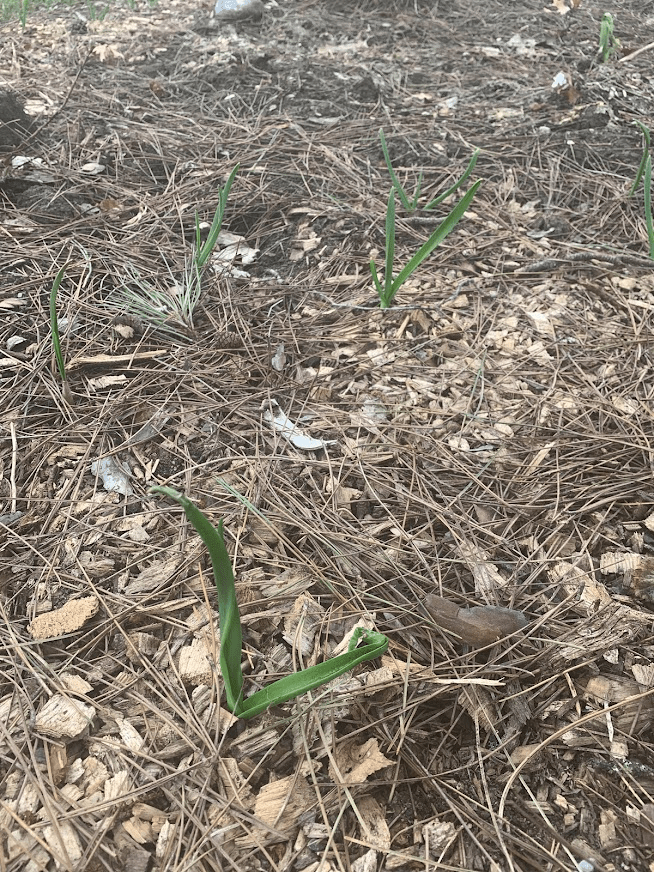
It’s hard, sometimes, to see what’s new. The new things we already know–new babies, new sprouts of daffodils and garlic pushing up through the cold spring soil–are easy to see, understand, and celebrate. What throws us are the new things that unsettle how we’ve always understood something. Five hundred years ago, it was hard to believe that the Earth is round and revolves around the sun; three years ago, it was hard to fathom how a tiny virus could multiply, spread wildly through the air and kill so many people. When faced with new truths, ideas that shake our core knowledge of how things work, it’s easier and completely human to sometimes just refuse to believe.
Still, viruses and the shape and trajectory of Earth can be proven over time, using tools that make it possible for our eyes to see the truth. No tool is ever going to be able to prove that the Resurrection is real.
In fact, believing that Christ rose from the dead can mean putting aside what science and our lived experience teach us. Even the creeds and other statements Christians have come up with over time to define our beliefs don’t explain the mystery of it all.
Jesus’s body disappears from the tomb, but when he reappears, he doesn’t look the same. He appears and disappears in locked rooms like a ghost. He invites Thomas to put his hand in his wounds. But when Mary reaches for him, he tells her not to hold on to him. He speaks, walks, and eats with people, and as soon as they recognize him, he disappears again. Even the people who see it don’t really understand what’s happening.- Like 18-year-old me, they don’t have a religious container big enough to fit it in. All they can do is witness.
Every year I consider all those things and wonder why I still believe in the Risen Christ. Is it the force of habit? Is it easier and more comfortable for me to believe–to keep stuffing the horror and suffering and pain of this world into a container called Christ, so that I can believe Peter when he tells us in today’s lesson that everything will be okay in the end?
Honestly? That is probably some of why I believe. But there’s more too. All my life, a part of me will still be that college freshman who just doesn’t get it. But now I know that what I can’t comprehend with my head, I can come to understand in other ways.
People who hope against all odds help me understand the Resurrection. People who work at impossible problems, finding ways to heal the earth and restore the environment. People who love the marginalized people around them the way that Jesus loved. People who experience terrible suffering and still believe God’s love surrounds them.
The stories of Jesus, healing people who are broken and filling hungry people with food and living water, help me too. I hear Resurrection in the parables he told about mustard seeds and prodigal sons. The Bible is filled with stories that teach me the endless rhythm and joyful song of suffering that is healed, of birth, death, and rebirth.
I believe in Resurrection because I choose those people and those stories, that Way of Love, that new kind of life. In it all, Christ is Risen.
He is risen indeed.

 Sunday Morning Words