One thing I love best about St. Mary’s is the way someone (usually under 12) blindsides me with a question that I don’t have a good answer to. Last week, it was a question at the end of our reflection time about why Abram (or anyone really) would be sacrificing animals to God. My answer at the time, “Well, because that’s what people did back then,” was both accurate and way too easy. Here’s another go.
When it comes to understanding deeply complex stuff like suffering and love and commitment, we often need something concrete to anchor our thoughts and focus our energy and attention. It’s a reason why we create rituals: saying grace before dinner or writing our faults on rocks before the confession at church. It’s a reason for sacraments (outward signs of invisible graces): sharing bread and wine at communion, pouring water on someone’s head at baptism, the laying on of hands at ordination or confirmation. The ritual or rite matters, not in itself but because it points us toward something more profound than words can express, or our brains can fully fathom.
I think sacrifice was also meant to do this. Faced with great joy or great need, the sacrificer took time away from the ordinary busyness of a day to make a special bread or cull an unblemished animal from their herds and give it reverently to Yahweh, in order to express something too deep for words. And so, in his anger and grief over his continued childlessness, Abram carefully prepares a sacrifice and spends the whole day driving off birds of prey. When he finally falls asleep, a “deep and terrifying darkness falls on him.” There, as he lies submerged in that sea of anxiety and despair, God comes to him in smoke and flame, and this time, Abram’s finally able to stop arguing and listen.
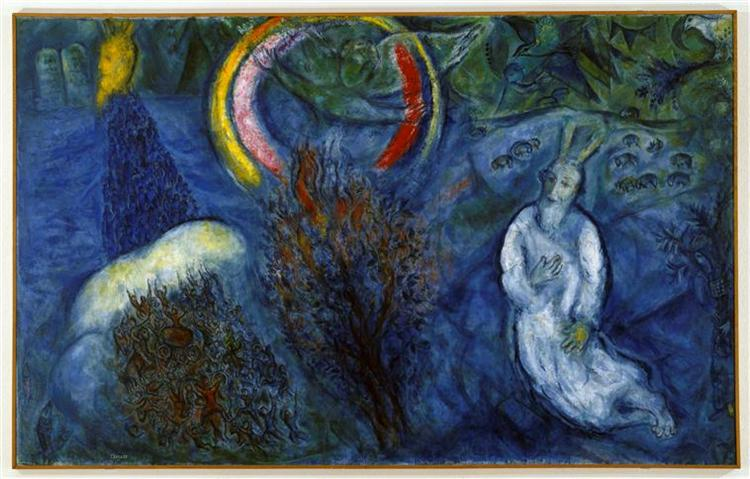
There are other means as well. In the first reading for the third week of Lent Moses wanders around in the desert tending his father-in-law’s sheep, years after he ran away from Egypt because he killed one of Pharoah’s soldiers for his cruel abuse of an Israelite man. It takes a burning bush for Yahweh to catch his attention and send him back to Egypt. So much of the history of God’s people depends on Moses’ metanoia–change of mind–sparked by that strange fire in the desert.
But there’s a flip side to how we use sacrifice, rituals, and burning bushes. Sometimes, the thing that is intended to help us find our way becomes an end, not a means. We hold on to rituals in government (electoral college, anyone?) or in church just because that’s the way we’ve always done it.
Things really go south, though, when a ritual or happening leads to people justifying the suffering or exclusion of others. So a church teaches that without a correctly conducted baptism, a person will go to hell or cannot fully participate in the church. Or I hear someone has a cancer diagnosis and start making a mental list of all the things that person did that caused it. In the Lent 3 Gospel, people are convinced that a group of Galileans–brutally murdered by Roman soldiers on the temple altar, their blood mixed with the sacrifices–must have done something deeply wrong to deserve such a horrifying death.
When we seek to explain why bad things happen to other people, we’re usually not doing that out of concern for them, but for ourselves. If I can pin down a concrete reason why people suffer, I can control it and reassure myself it won’t happen to me. Jesus sees his questioners’ desire to blame the Galileans as a way to distract from looking at their own “terrifying darkness.”
So Jesus tells them to repent: to stop asking the wrong questions and, like Abram, to face the darkness inside; to see, like Moses, what they are running away from. And he’s also reminding them of the other meaning of the word translated here as repent: metanoia. He’s asking them to change their minds, to reset their perspective. He’s reminding them of what the prophets have told them repeatedly: that the heart and purpose of sacrifice lie in doing justice, loving kindness, and walking humbly with their God. This is the kind of deep, real sacrifice that Jesus practices every day as he heals and prays and teaches and casts out demons. It’s the sacrifice that heads him, steady and unflinching, toward Jerusalem, toward the cross, and beyond.

 Sunday Morning Words